

Penny Parker – Holding hope: From corporate law to prison reform
Former Freshfields corporate associate Penny Parker worked on landmark European deals during her legal career. Then came something even more ambitious: UK prison reform.
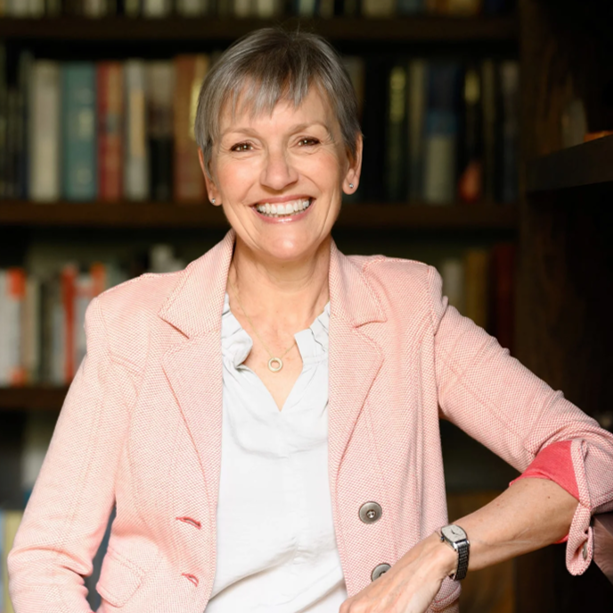
Growing up in Cornwall, far removed from the world of global elite law firms, Penny Parker did not arrive at law through a mapped-out ambition. Originally a Geography student, she was encouraged by university friends to switch disciplines, a decision that would shape the decades to come. In 1986, Penny joined the firm as one of just five women in a trainee cohort of 22.
Advising on iconic projects: Eurotunnel and Virgin
From the outset, Freshfields immersed Penny in work at the forefront of the legal market. As a corporate associate, she became part of the team advising on the refinancing of Eurotunnel — a vast, multi-disciplinary project that helped bring one of Europe’s most ambitious infrastructure developments to life. She describes the experience as a “huge rollercoaster ride.” The work pushed her into unfamiliar technical territory and taught her a lesson she would carry throughout her career: lawyers do not need to be the technical experts, but they must know how to ask the right questions.
Her time at the firm also included work on the sale of Virgin Music to Thorn EMI, then the largest private corporate sale in history. “The due diligence involved checking through artist rosters and artist contracts - checking that they wouldn't fall apart the moment the sale went through.” Penny recalls that while Richard Branson was copied into emails, he remained largely unseen during the transaction. Then, at 7am on the morning of signing, she received a call that stayed with her — and highlighted the people skills at the heart of his success. “It was Richard. He wanted to say that he knew the team had been working all night and wanted to express his thanks for everything we had done in making the transaction happen.”
Inside prisons: seeing what the system could not
After starting a family and leaving Freshfields, Penny was invited by a friend to volunteer at a local prison and “very quickly got totally hooked.” Soon afterwards, she was asked if she would consider training to establish a restorative justice program inside the prison. In 2005, she launched the program at Wandsworth Prison in London, later extending it to two further prisons. Determined to approach the work with the same rigor she applied to her legal career, Penny then undertook a part-time Master’s degree in Criminology to bring some learning and context to her experiences running the program.
Across her work in prisons, Penny repeatedly encountered people who told her it was their fifth, seventh, or even tenth time back inside. What became increasingly clear was how poorly the system recognized how difficult leaving prison was. Penny comments, “You don't go to prison when life is rosy. You go to prison when things have gone wrong. And then prison layers more on top of that… the breakdown of family relationships, the loss of employment, maybe losing your home. Coming out of prison is not easy.” Penny also uncovered a more subtle failure. Those approaching the end of their sentences were asked to disclose details about their home lives and employment prospects, but they knew that honesty could reduce their chances of release. As a result, many chose not to be truthful.
In response, Penny and her co-founder created StandOut, a charity that empowers people to make positive change, realize their potential and rebuild their lives after prison. StandOut was established in order to do something radically simple: give people a safe space to talk about what they needed to lead successful lives outside of prison, and provide practical support to meet those needs. But from the outset, the challenge was trust. Opening up means being vulnerable, and in prison, vulnerability can leave you open to exploitation by other prisoners. “People put on defensive armor when they're in prison, but life outside doesn't work if you live behind a defensive shell. It's partly about creating space where people get to test those muscles again.” Trust, Penny explains, was built not through words, but through consistency. “By following through on what we said we would do, we became a trusted organization, which meant that our beneficiaries would want to keep working with us after release.”
Over time, something else began to emerge — trust between participants themselves. At the end of each program, many reflect that they now have a small group of friends who genuinely have each other’s backs in the wings — something extraordinarily rare in prison life.
A network that showed up: Freshfields and StandOut’s first steps
After developing the program and about to pilot it, Penny turned to her Freshfields network. She wrote to a former colleague who had started alongside her in September 1986. ‘If I was to put this proposal to you and ask if you would consider funding it, would you think that was outrageous or do you think you would respond?’ The response was immediate — Penny received her first cheque. Knowing that many former Freshfields colleagues had since built successful legal careers, she wrote to those she remained in touch with and raised the £25,000 needed to fund StandOut through its pilot year. Penny also drew on support from the Freshfields CSR and pro bono teams, before turning StandOut into a fully-fledged charity a year later.
StandOut's results speak for themselves. Penny explains, “If someone works with us, they are half as likely to reoffend. And they're three times more likely to be in work six months after being released.” Penny describes the first day after release as a series of “sliding door” moments, "Our participants will often tell stories of the moments where without the presence of StandOut coaches, the temptation to do the wrong thing rather than the right thing could have been overwhelming."
A common StandOut success story describes someone with complex challenges achieving their longest extended period outside prison. Keeping one person out of prison for just two years saves the taxpayer over £90,000. Occasionally, the outcomes are extraordinary. Penny recalls one participant who had previously run a construction company and was confident about rebuilding his life — but one question from Penny changed everything, “What did you dream of doing when you were young?” He answered, “If I could dream, I think I'd like to be a paramedic.” With StandOut’s support, he went to university to study medical biology, graduating with the highest first in any science subject that year, and is now working as a microbiologist.
Looking back, Penny considers the thread that links her work at Freshfields to her work at StandOut. “At Freshfields, I learned the importance of doing the very best job for people. Prisons can be a place where people ask ‘does it really matter?’, but at StandOut, being first class very much runs through how we work. At Freshfields, you always go to the last degree for your client and it has to be excellent. That is a value we've brought to prisons through StandOut. We pride ourselves on that.”
Today, StandOut operates with a staff team of 24. The program delivery also depends on support from volunteers—both individual volunteers, including former Freshfields litigation partner Paul Leonard, and teams of corporate volunteers from professional services firms, consultancies and the Ministry of Justice. Volunteers typically use employee volunteering days to help people put a CV together, conduct mock interviews with people supported by StandOut in prison or to support a graduation event. With no ongoing commitment required, those based in London are encouraged to get involved.
Describing what lies at the heart of StandOut’s work, Penny explains, “We hold the hope for someone until they can believe it and hold it for themselves. And, in an environment where you're always judged by the worst things you've ever done, to have people talk about your strengths, help you see them and consider how you could use them, can be life changing.”
As the conversation draws to a close, Penny offers advice to those at the beginning of their careers, “Free yourself from the thought that your decisions are lifelong. What you're doing now may not be remotely connected to what you're doing in 10 years, but the skills you learn along the way will get you to wherever you're supposed to be.”
Visit standout.org.uk for more information.